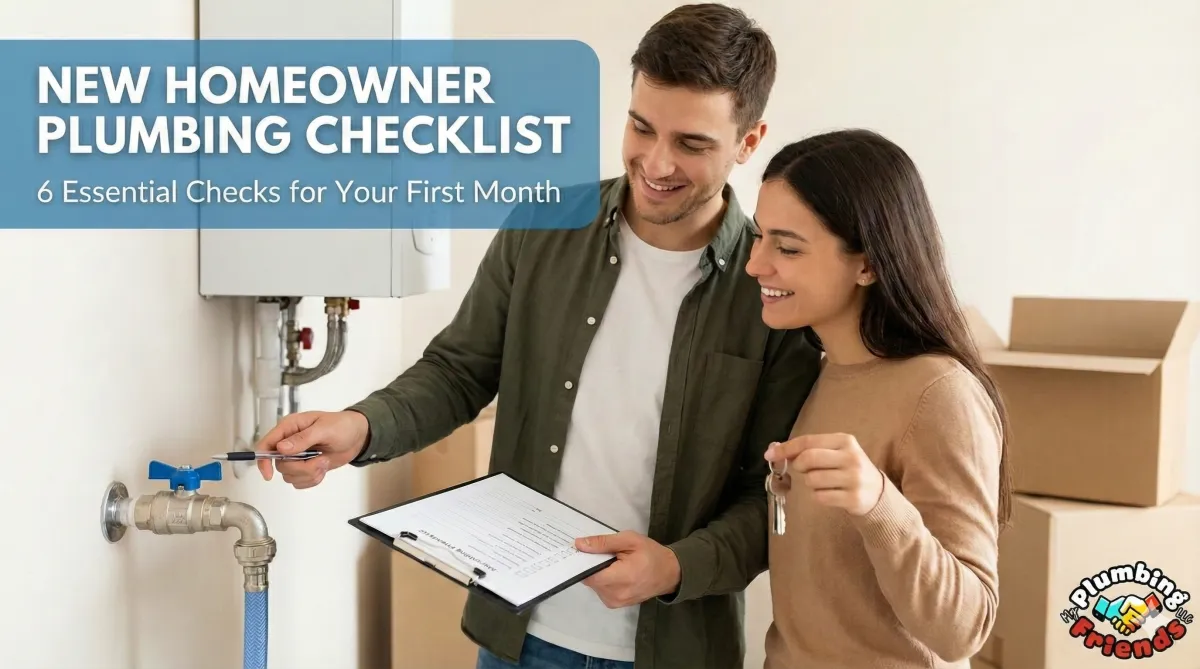
The "New Homeowner" Orientation: Your Essential Plumbing Checklist for the First Month
Buying a new home is one of life’s most exciting milestones. You’ve signed the papers, got the keys, and maybe even picked out paint colors. But amidst the chaos of moving boxes and furniture arranging, there’s a silent system in your home that needs your immediate attention: your plumbing.
While a home inspection gives you a general overview, it rarely catches everything. The reality is that many plumbing disasters—from burst pipes to flooded basements—are entirely preventable if you know what to look for early.
Think of this guide as your "orientation" from a friend in the business. We’re going to walk you through the critical plumbing checks every new homeowner should perform in their first 30 days. These simple steps can save you thousands of dollars in repairs and give you the peace of mind to truly enjoy your new castle.
Table of Contents
1. Locate Your Main Water Shut-Off Valve (Immediately!)
2. Inspect the Water Heater: The Heart of Your Home
3. The "Silent Leak" Test: Check Your Water Meter
4. Evaluate Your Water Quality (The Florida Factor)
5. Audit Your Toilets and Drains
1. Locate Your Main Water Shut-Off Valve (Immediately!)
If you take only one thing away from this article, let it be this: Find your main water shut-off valve today.
Imagine a pipe bursts in your kitchen at 2:00 AM. Water is spraying everywhere. Panic sets in. In that moment, you do not want to be searching the perimeter of your house with a flashlight, trying to figure out how to stop the flood.
Where to Find It
In most Southwest Florida homes, the main shut-off valve is typically located:
Outside: usually on the side of the house facing the street, near a hose bib (outdoor faucet).
In the Garage: often near the water heater or laundry area.
In the Ground: inside a meter box near the street (though you usually have a "house valve" closer to the structure).
Pro Tip: Once you find it, test it. Turn it off and check a faucet inside to ensure the water stops. If the valve is stuck or rusted, do not force it. A broken valve in the "off" position is a major headache. Instead, call a professional to replace it.
2. Inspect the Water Heater: The Heart of Your Home
Your water heater works harder than almost any other appliance. In your first month, you need to determine its age and health to avoid a cold shower surprise (or a flooded garage).
Check the Age
Look for the manufacturer’s sticker on the side of the tank. The serial number often contains the date code. If the unit is older than 10-12 years, it is living on borrowed time.
Look for Warning Signs
Rust or Corrosion: Check the bottom of the tank and the inlet/outlet pipes on top. Rust is a sign of slow leaks.
The "Popcorn" Sound: If you hear rumbling or popping noises when the heater is running, that’s sediment buildup at the bottom of the tank. This sediment hardens, reducing efficiency and eventually causing the tank to crack.
If your water heater is aging but functional, consider scheduling a professional water heater flush. This maintenance step can extend the life of the unit and improve efficiency.
3. The "Silent Leak" Test: Check Your Water Meter
Small leaks are sneaky. They can run behind walls or under concrete slabs for months before you see water damage, driving up your utility bill in the process.
Here is a simple way to check for hidden leaks using your water meter:
Turn off all water inside and outside the house (faucets, dishwasher, washing machine, sprinklers).
Locate your water meter box (usually near the street curb).
Open the lid and look at the dial. Many modern meters have a "leak indicator"—typically a small triangle or star that spins when water is flowing.
The Test: If everything in the house is off, but that little indicator is moving (even slowly), you have a leak.
If you confirm the meter is moving, you likely have a hidden leak. In this case, professional leak detection services are necessary to pinpoint the issue without tearing up your home unnecessarily.
4. Evaluate Your Water Quality (The Florida Factor)
If you are new to the area, you might have noticed that tap water in Southwest Florida can be... distinct. Our region is known for "hard water," which is rich in minerals like calcium and magnesium. While safe to drink, hard water is brutal on your home’s plumbing.
Signs of Hard Water:
White, chalky scale buildup on showerheads and faucets.
Soap that doesn't lather well.
Dishes coming out of the dishwasher with spots.
Dry, itchy skin after showering.
Over time, this scale builds up inside your pipes and appliances, restricting flow and causing premature failure. Installing a whole-home water filtration or softener system is one of the best investments you can make to protect your new home’s infrastructure.
5. Audit Your Toilets and Drains
A "running" toilet might seem like a minor annoyance, but it can waste up to 200 gallons of water per day. Walk through every bathroom and listen. If you hear water trickling long after the flush, you likely need a new flapper or fill valve—an easy fix.
The "No-Flush" Rule
As you settle in, educate your family (and guests) on what never goes down the drain. Even items labeled "flushable" wipes do not break down like toilet paper. They snag on pipe imperfections and create massive clogs.
Keep these out of your system:
"Flushable" wipes (seriously, don't do it!)
Paper towels and feminine hygiene products.
Cooking grease and oil (pour these in a can, not the sink).
If you notice a sink draining slowly or a toilet that bubbles when you run the shower, these are early warning signs of a main line blockage. Don't wait for a backup; drain cleaning is much cheaper than cleaning up sewage.
6. Know Your Main Sewer Cleanout
Just like the water shut-off, you need to know where your sewer cleanout is. This is usually a white PVC pipe with a screw-on cap located in your yard, close to the house foundation.
This access point is vital for plumbers to clear blockages in your main sewer line. Ensure it isn't buried under mulch, hidden by bushes, or paved over by a previous owner. If you have a backup, knowing exactly where this is will save your plumber time—and save you money.
Conclusion: Start Your Homeownership Journey Right
Your new home is a sanctuary, and keeping the plumbing healthy is key to keeping it that way. By performing these simple checks during your first month, you aren't just looking for problems—you're preventing them. You are taking ownership of your home’s health and ensuring your investment holds its value.
However, we know that sometimes you just want a professional set of eyes on things. If you found something concerning during your checks, or if you simply want a clean bill of health for your new property, you don't have to figure it out alone.
Ready to enjoy your new home with total peace of mind?
Don't let a hidden leak or an aging water heater ruin your housewarming. Let the experts handle the inspection. Contact My Plumbing Friends today to schedule a comprehensive plumbing safety inspection. We’ll make sure your new home is as reliable as it is beautiful.

Facebook
Instagram