
Fix Sulfur Smell in Southwest Florida Tap Water
Home Water, Southwest Florida, Sulfur Smell
Why Does My Southwest Florida Tap Water Smell Like Rotten Eggs?
If you live in Southwest Florida and your tap suddenly hits you with that unmistakable rotten egg odor, you’re not alone. Many Fort Myers, Cape Coral, and Naples homeowners deal with “Sulfur Smell Water” at some point—especially if they’re on well water or have an older water heater. The good news? It’s usually fixable, and often less scary than it smells.
First Things First: Is Sulfur Smell in Water Dangerous?
That rotten egg odor usually comes from hydrogen sulfide gas (H₂S). In the low levels typically found in Southwest Florida homes, it’s considered more of a nuisance than a serious health threat, according to the Florida Department of Health. It can, however, be:
Annoying and embarrassing when guests come over
Corrosive to plumbing over time
A sign that you should test your water—especially if you’re on a private well
💡 Friendly reminder: If your water suddenly smells different, gets cloudy, or changes color, schedule a water test. Sulfur odors can sometimes mask other issues, particularly in well water.
Why Southwest Florida Is Prone to Sulfur Smells
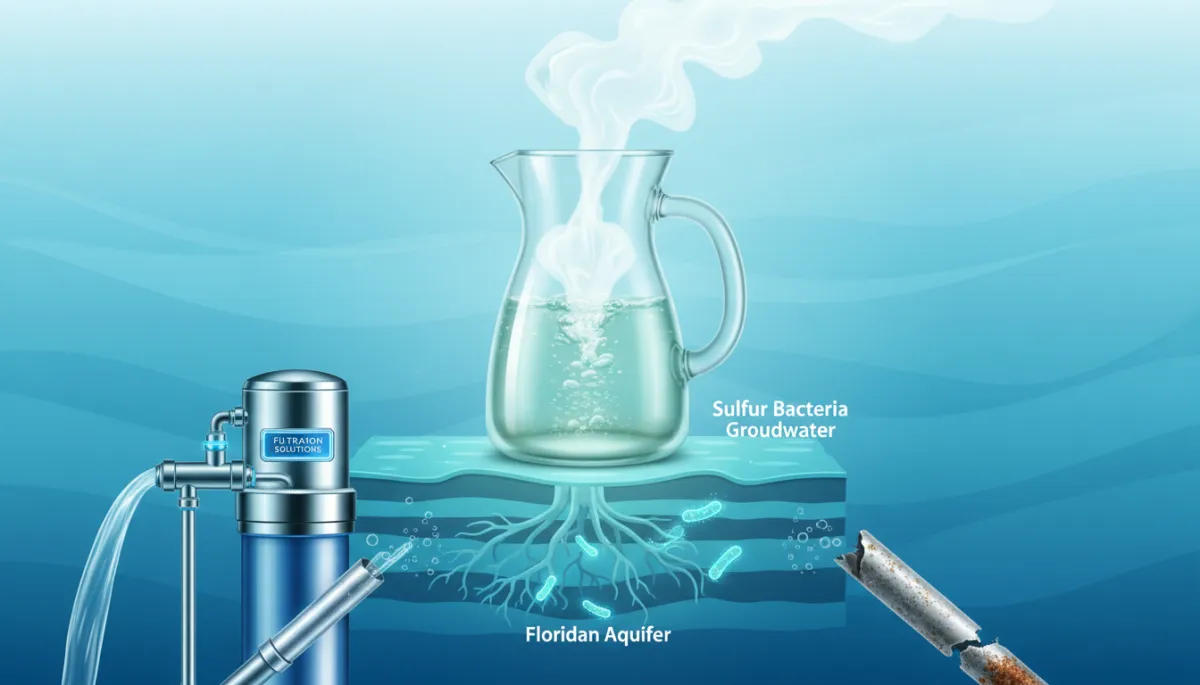
To understand why your Fort Myers tap water might smell off, it helps to look underground. Much of the region’s water—especially for wells and even for some municipal systems—comes from the Floridan Aquifer, a huge underground layer of limestone and porous rock that stretches under most of Florida.
In this aquifer, warm temperatures and low-oxygen conditions are perfect for sulfur bacteria groundwater activity. These naturally occurring bacteria use sulfate in the water as “food” and give off hydrogen sulfide gas as a byproduct. When that gas reaches your tap, you notice it instantly as that classic rotten egg smell.

Warm, low-oxygen groundwater in the Floridan Aquifer helps sulfur bacteria produce hydrogen sulfide gas.
Fort Myers Tap Water: City Supply vs. Private Wells
If you’re on Fort Myers tap water from the city, your water is drawn from deep wells and treated—often with reverse osmosis—before it ever reaches your home. Official reports show that the city’s water meets state and federal standards, and hydrogen sulfide is usually removed during treatment. Still, you may occasionally notice mild odors if:
Chlorine levels dip in parts of the system
Water has been sitting in your home’s plumbing for a while (common in seasonal homes)
If you’re on a private well, sulfur odors are much more common because you’re pulling water straight from the aquifer without centralized treatment. In that case, “Hydrogen Sulfide Florida” is not just a phrase you see online—it’s something you smell every time you turn on the tap unless you treat it.
Is It the Water Supply or Just My Plumbing?
Before you invest in any big fix, it helps to pinpoint where the smell is coming from. Try these quick at-home tests:
Hot vs. cold test: Turn on only the cold water at a sink and smell it. Then try only the hot. If only the hot water smells, your water heater is the likely culprit. If both smell, the issue is probably in your incoming water supply or well.
Single faucet vs. whole house: If just one bathroom sink smells, but your kitchen and shower do not, the odor may be from bacteria in that drain, not from the water itself.
Glass test: Fill a clean glass with water, step away from the sink, and smell the glass. If the odor fades quickly, it may be coming from the drain area. If it lingers in the glass, it’s likely in the water.
💡 Tip for “snowbirds”: If you leave your Southwest Florida home for months, stagnant water in pipes and the heater can encourage sulfur bacteria. Always flush your plumbing and service the heater when you return.
Sulfur Bacteria vs. a Failing Water Heater Anode Rod
One of the most common surprises for homeowners is discovering that the problem isn’t always in the city water or well—it’s in the water heater anode rod.
Most tank-style heaters contain a sacrificial anode rod (often magnesium) that protects the tank from rusting. In the presence of sulfate in the water and certain types of bacteria, that rod can react and generate hydrogen sulfide gas inside the tank. The result: hot water that smells like sulfur, even if your cold water is fine.
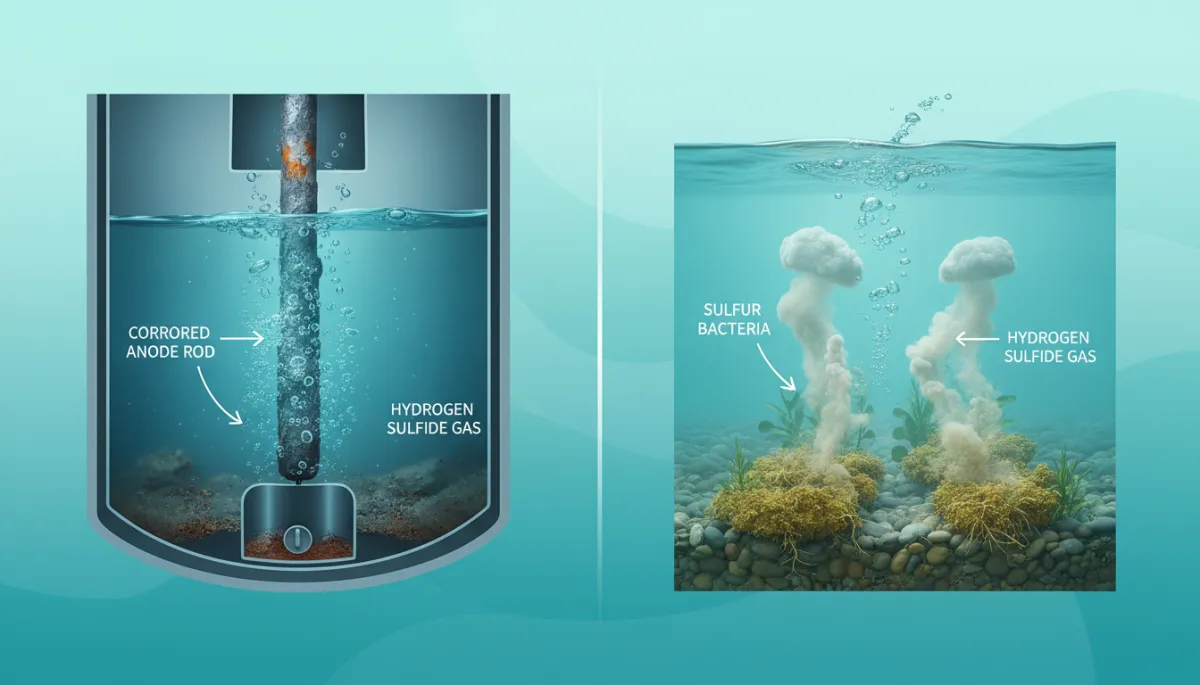
Hot-only sulfur odors often point to the anode rod, while whole-house smells suggest groundwater bacteria.
By contrast, when the issue is sulfur bacteria groundwater, both hot and cold water usually smell, and the odor may be strongest at the first faucet you open in the morning or after the water has been sitting in the pipes.
Practical Fixes: From Simple Cleanups to Filtration Solutions in Florida
1. Easy, Low-Cost Steps
Clean your drains and P-traps: Sometimes the “Sulfur Smell Water” is really sulfur smell from the drain. Flush P-traps with a mix of hot water and vinegar (or a small amount of bleach if your plumbing allows) to kill odor-causing bacteria.
Flush your plumbing: Run each faucet for several minutes, especially after vacations, to move stagnant water out of the lines.
2. Water Heater Fixes
Replace the anode rod: Many Southwest Florida plumbers recommend swapping a magnesium rod for an aluminum-zinc anode rod, which is less likely to react and create hydrogen sulfide. This is a common, effective fix when only your hot water smells.
Disinfect the tank: A professional can drain the heater and disinfect it to kill sulfur-loving bacteria inside.
3. Whole-Home Filtration Solutions for Florida Homes
When the odor is coming from your well or the broader water supply, you’ll likely need more robust filtration solutions Florida homeowners commonly use. Popular options include:
Aeration systems: These introduce air into the water to let hydrogen sulfide gas escape before the water enters your home. Think of it as “burping” the water safely outside instead of in your kitchen sink.
Oxidation and filtration: Systems that use chlorine, hydrogen peroxide, or other oxidants to convert hydrogen sulfide into solid particles, which are then filtered out—often with a special media tank.
Catalytic carbon filters: High-grade carbon media designed to adsorb sulfur compounds, improving both taste and odor.
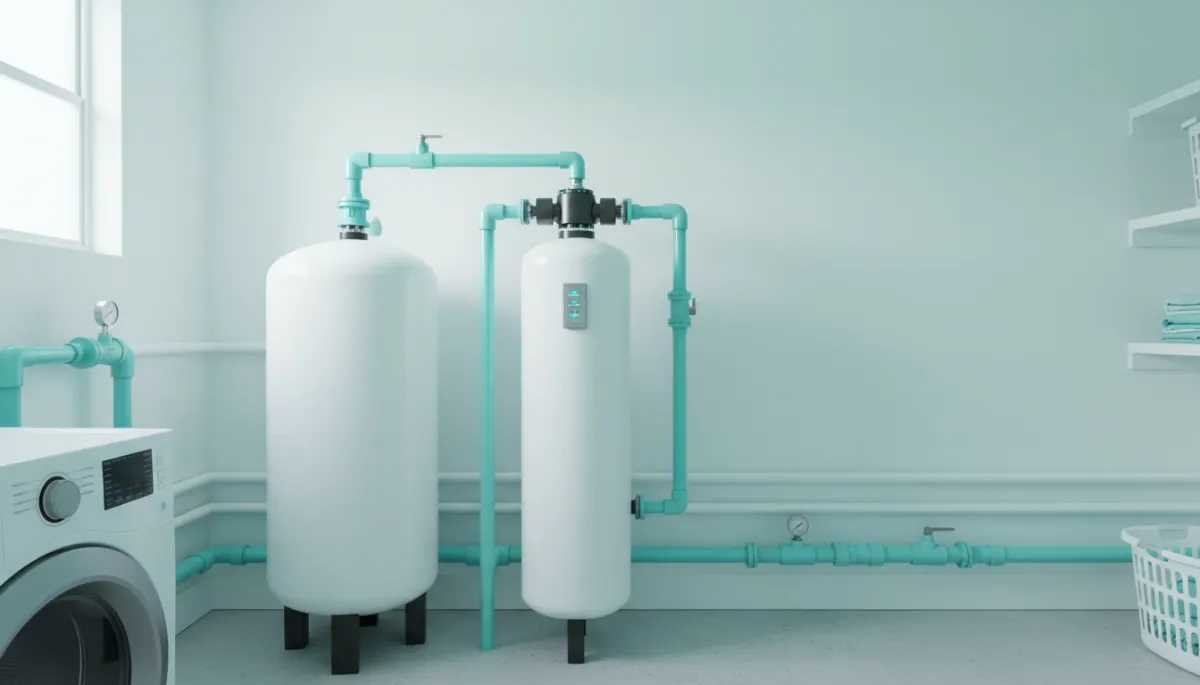
Aeration and catalytic carbon systems are popular Florida choices for sulfur-free whole-house water.
Many Fort Myers, Cape Coral, and Lehigh Acres homes combine these with a standard softener to handle both hardness and odor. A local water treatment professional can test your water and size a system that fits your household’s usage and budget.
When to Call in a Pro (and What to Ask)
If your DIY steps don’t clear things up, it’s time to bring in a licensed plumber or water treatment specialist. When you call, it helps to share:
Whether you’re on Fort Myers municipal water or a private well
If the smell is in hot water only, cold only, or both
Which faucets are affected and when you notice it most

A simple water test helps pinpoint sulfur sources and choose the right fix for your home.
💡 Good question to ask: “Will this system handle hydrogen sulfide levels typical for my area, and what maintenance will I need to keep it working?”
Enjoying Fresh, Clean Water in Southwest Florida
Living in Southwest Florida means warm weather, beautiful beaches, and, yes, occasionally quirky tap water. But a rotten egg smell doesn’t have to be your new normal. Once you understand how Hydrogen Sulfide Florida occurs—from sulfur bacteria in the Floridan Aquifer to reactions with your water heater anode rod—you’re in a much better position to fix it.
With the right mix of simple maintenance, smart diagnostics, and well-chosen filtration solutions Florida homeowners trust, you can turn that smelly tap into water that looks, smells, and tastes the way it should. If your Fort Myers tap water has been making you wrinkle your nose, consider this your friendly nudge to test, troubleshoot, and treat it—so you can get back to enjoying your home, one fresh glass at a time.


Facebook
Instagram