

Causes of Pinhole Leaks in Lee County Copper Pipes
Florida Plumbing, Pinhole Leaks, Copper Pipes, Lee County
What Really Causes Pinhole Leaks in Copper Pipes in Lee County?
As a senior software engineer who spends way too much time modeling real‑world problems in code, I’ve learned that plumbing in Florida—especially in Lee County—follows its own kind of “system design.” When that system breaks, you see it as pinhole leaks in copper pipes, soaked drywall, and surprise repair bills. In this article, I’ll walk through the chemistry and cause‑and‑effect behind these leaks in Fort Myers, Cape Coral, and surrounding areas, using the same logical, step‑by‑step thinking we’d apply to debugging a production app.
Pinhole Leaks 101: The Bug Report for Your Copper Pipes
A Pinhole Leak is exactly what it sounds like: a tiny, often needle‑sized hole that forms in a copper pipe wall. It usually starts as a small drip you barely notice and can quickly escalate into water damage, mold, and structural issues. In software terms, it’s not a full system crash—it’s a slow memory leak that eventually takes everything down if you ignore it.
Across Florida, and especially in Lee County, these leaks are not random. They’re the visible symptom of an underlying process: Water Corrosion driven by local water chemistry, aging copper, and the disinfectants used by municipal systems like Lee County Utilities. To understand why your pipes are failing, we have to look at the chemistry and how it interacts with older copper plumbing systems in real homes in Fort Myers and Cape Coral.
Florida Plumbing Context: Why Lee County Is a Perfect Storm
Florida plumbing has a few “environment variables” that make copper pipes work harder than they would in many other states:
Warm groundwater and higher ambient temperatures speed up chemical reactions inside pipes.
Variable mineral content and hardness can make water either more or less corrosive, depending on the exact mix.
In coastal areas like Cape Coral, chloride‑rich soil and salty air can attack copper from the outside as well as the inside.
On top of that, Lee County’s public water systems use chloramines as their primary disinfectant. According to Florida regulations, the maximum residual disinfectant level for chloramines is 4.0 mg/L as Cl₂, and Lee County Utilities aims to stay within that limit while keeping the system safe from microbes. That’s great for public health—but it sets up a subtle, long‑term interaction with older copper pipes that many homeowners never see coming.
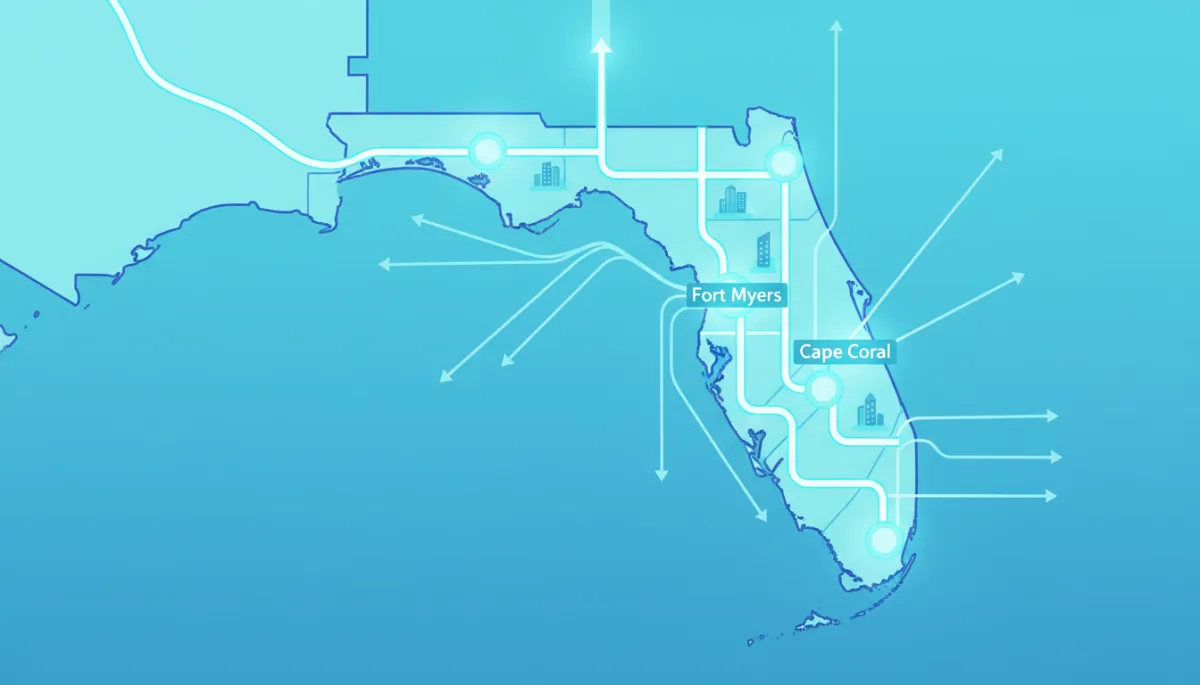
Fort Myers and Cape Coral share similar water treatment practices, but older homes react differently.
The Chemistry: How Chloramine Starts the Pinhole Leak Chain Reaction
Chloramine is a combination of chlorine and ammonia. Utilities like it because it’s more stable than free chlorine and forms fewer regulated by‑products. But “more stable” doesn’t mean “inert.” In contact with copper, chloramine participates in a slow electrochemical dance that can end with pinhole leaks.
In a healthy system, copper pipes develop a thin, protective oxide layer on the inside. Think of it like a security layer in your app that keeps external users from touching core logic. When water with high municipal chloramine levels flows through older copper plumbing, several things can happen:
Chloramine and dissolved oxygen slightly oxidize the copper surface, changing the composition of that protective film.
Minor imperfections—solder residue, rough spots, or turbulence near elbows—create “hot spots” where the film is thinner or disrupted.
At those hot spots, the copper underneath is exposed and begins to dissolve into the water, creating tiny pits.
Over time, the pits deepen until they fully penetrate the pipe wall—hello, pinhole leak.
💡 Pro Tip: If you see blue‑green stains on sinks or around fixtures in Fort Myers or Cape Coral, that’s often a sign of copper corrosion long before a pinhole leak appears.
Older Copper Plumbing Systems: Legacy Code with Hidden Vulnerabilities
Many homes in Fort Myers and Cape Coral were built when Copper Pipes were the gold standard. Those systems are like legacy codebases: they’ve “just worked” for decades, but they were designed for a different environment. Over time, three big factors make older systems more vulnerable to pinhole leaks:
Age and wear: Decades of flow slowly thin the copper wall and disrupt the protective film inside the pipe.
Old solder and flux: Past installation practices sometimes left acidic flux or mixed metals in joints, which act like tiny corrosion accelerators.
Flow dynamics: High velocity near elbows, tees, and partially closed valves leads to erosion‑corrosion, stripping away protective layers.
Combine that with chloraminated water, and you get a classic Florida Plumbing failure mode: localized pitting that suddenly appears as a pinhole leak in a wall, ceiling, or slab. It’s not that Lee County’s water is uniquely “bad”—it’s that its chemistry doesn’t play well with certain older copper installations.
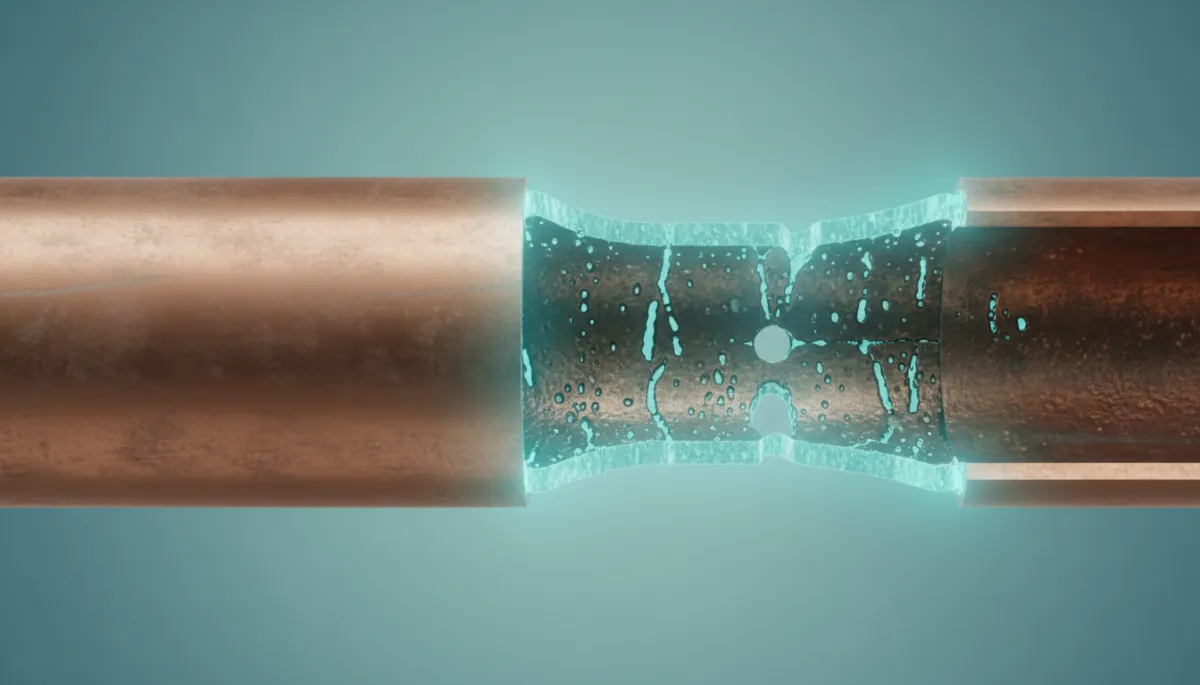
Pinhole leaks usually start as tiny corrosion pits at specific stress points.
Thinking Like a Developer: Modeling Chloramine Effects in Code
If you’re a data or code person, it can help to treat this like a simulation problem. Here’s a playful Python‑style sketch that models risk of pinhole leaks in Lee County Plumbing based on a few inputs: age of pipes, estimated chloramine level, and flow rate.
from dataclasses import dataclass

@dataclass
class PlumbingProfile:
    city: str
    pipe_age_years: int
    chloramine_mg_per_l: float
    flow_velocity_ft_per_s: float

def pinhole_risk_score(profile: PlumbingProfile) -> float:
    # Base risk grows with age (legacy copper)
    age_factor = min(profile.pipe_age_years / 50.0, 1.5)

    # Chloramine factor: assume near 4.0 mg/L is high but still legal
    chl_factor = min(profile.chloramine_mg_per_l / 4.0, 1.2)

    # Flow factor: higher velocity near fittings & elbows increases erosion-corrosion
    flow_factor = 1.0
    if profile.flow_velocity_ft_per_s > 5.0:
        flow_factor = 1.4
    elif profile.flow_velocity_ft_per_s > 3.0:
        flow_factor = 1.2

    # City tweak: coastal Cape Coral may see more external corrosion
    city_factor = 1.1 if profile.city.lower() == "cape coral" else 1.0

    return age_factor * chl_factor * flow_factor * city_factor

fort_myers_home = PlumbingProfile(
    city="Fort Myers",
    pipe_age_years=35,
    chloramine_mg_per_l=3.2,
    flow_velocity_ft_per_s=4.0,
)

cape_coral_home = PlumbingProfile(
    city="Cape Coral",
    pipe_age_years=40,
    chloramine_mg_per_l=3.2,
    flow_velocity_ft_per_s=5.5,
)

print("Fort Myers risk:", round(pinhole_risk_score(fort_myers_home), 2))
print("Cape Coral risk:", round(pinhole_risk_score(cape_coral_home), 2))
Obviously, this pinhole_risk_score() function is just a toy model, but it mirrors reality: older pipes + chloraminated water + high flow = higher odds of pinhole leaks over time, especially in coastal zones like Cape Coral.
Real-World Symptoms: How to Spot Trouble Before the Leak
Whether you’re in a condo in Fort Myers or a single‑family home in Cape Coral, watch for these early warning signs of water corrosion in copper pipes:
Blue‑green staining on sinks, tubs, or around faucet bases.
Unexplained drops in water pressure in specific fixtures or zones.
Small, recurring wet spots on ceilings or walls—especially below bathrooms or kitchens.
Musty odors that suggest hidden moisture, even when surfaces look dry.
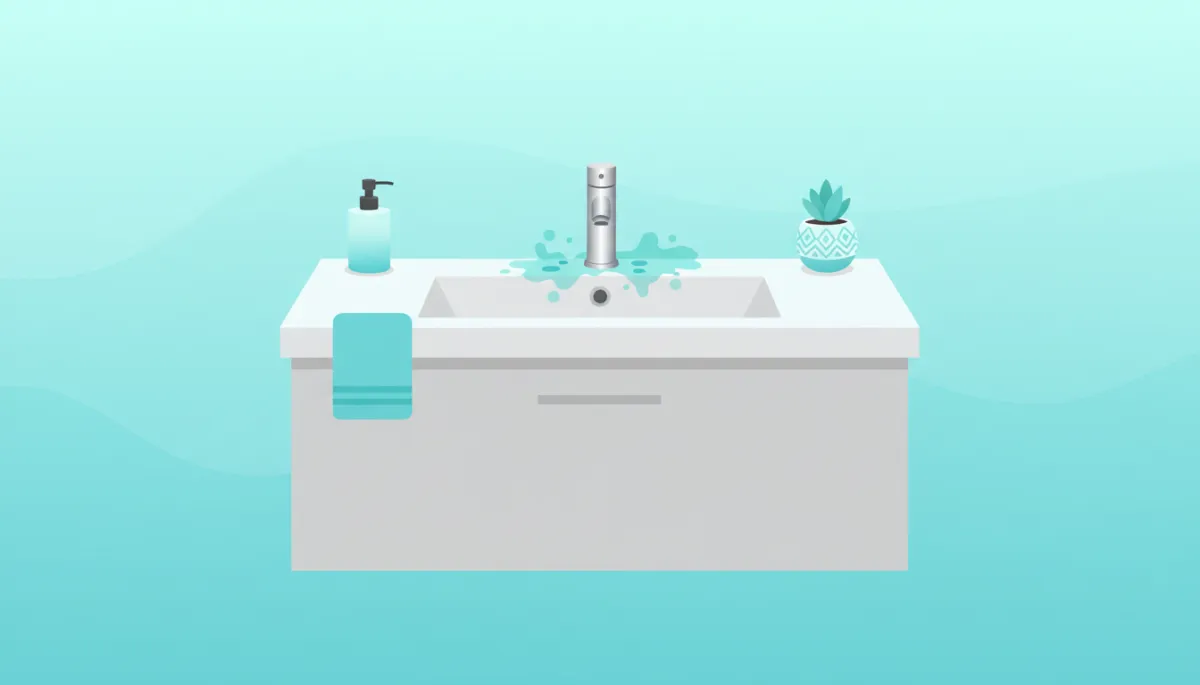
Blue-green staining is an early visual clue that copper is dissolving into your water.
What You Can Do: Practical Steps for Lee County Homeowners
You can’t easily change the disinfectant your city uses, but you can harden your “system” against pinhole leaks. Here are friendly, practical steps that align with how Florida Plumbing pros handle water corrosion in Lee County:
Flush standing water: Run cold water for about 30 seconds in the morning before using it for drinking or cooking. This helps reduce dissolved metals that accumulate overnight in copper pipes.
Get your water tested: A local lab or plumber can test pH, hardness, and metals. This is like logging and metrics for your plumbing system—data beats guessing.
Install treatment if needed: Depending on results, a whole‑house filter, corrosion inhibitor, or softener can help stabilize water chemistry and protect copper.
Inspect visible copper: Look at exposed pipes near the water heater, under sinks, or in the garage for discoloration, pitting, or crusty buildup.
Consider repiping with PEX or CPVC: In homes with repeated pinhole leaks, many Lee County Plumbing contractors recommend replacing old copper with non‑metallic materials, especially in Cape Coral where external soil corrosion is common.
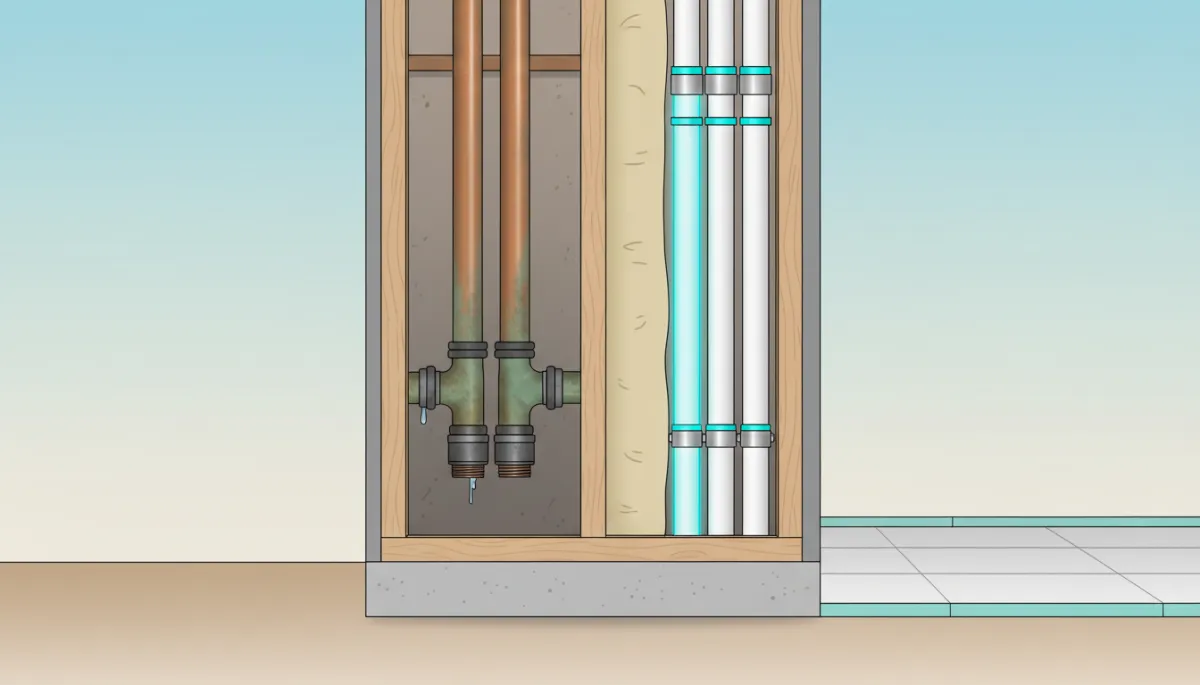
Many Lee County homeowners switch from aging copper to PEX to avoid future pinhole leaks.
Bringing It All Together: Cause and Effect in Your Walls
When you zoom out, pinhole leaks in Lee County aren’t mysterious at all. They’re the predictable output of a system where:
Municipal water uses chloramine for safe disinfection (within legal limits, often under 4.0 mg/L).
Older copper plumbing systems in Fort Myers and Cape Coral were installed for different water conditions decades ago.
Local environmental factors—warm temperatures, variable minerals, and coastal soil—amplify corrosion processes.
The result is a slow, chemical cause‑and‑effect chain that eventually surfaces as pinhole leaks. Just like in software, the fix usually isn’t a single patch; it’s a combination of monitoring, configuration changes (water treatment), and sometimes a full refactor (repiping).
If you live in Lee County and you’re seeing early warning signs—staining, unexplained damp spots, or repeated small leaks—it’s worth talking to a local Florida Plumbing professional who understands chloramine effects and copper corrosion. With the right data and a solid plan, you can turn a fragile, legacy plumbing “codebase” into a stable, future‑proof system that won’t surprise you with pinhole leaks in the middle of the night.


Facebook
Instagram