
Fix Smelly Drains & Slow Showers in SWFL
Smelly Drains, Slow Showers, Tree Roots Sewer, Hydro Jetting, Sewer Line Repair, Drain Cleaning
Smelly Drains, Slow Showers, and Tree Roots: The Real Reason Your SWFL Drains Keep Backing Up
If you live in Southwest Florida (SWFL) and feel like you’re constantly fighting smelly drains, slow showers, and surprise sewer backups, you’re not imagining it. Our sandy soil, heavy summer rains, aggressive tree roots, and aging cast-iron pipes create the perfect storm for repeat clogs. Let’s break down what’s really going on under your lawn—and how to fix it for good instead of calling a plumber at 2 a.m. every few months.
Why SWFL Homes Have So Many Drain Problems
Southwest Florida is a beautiful place to live—but it’s tough on plumbing. When you search things like “sewer smell from drain Florida” or “slow drain Cape Coral”, you’re seeing the symptoms of a bigger local issue. Four main factors work together to cause repeat clogs and backups:
Sandy soil that shifts and settles around your sewer line
Heavy summer rains that flood and overload the system
Invasive tree roots—especially ficus, melaleuca, and oak—seeking water in your pipes
Aging cast-iron sewer laterals that are corroded, cracked, or collapsing
Sandy Soil: The Hidden Culprit Under Your Yard
SWFL’s sandy soil drains rainwater quickly, which is great for avoiding standing puddles—but not so great for your sewer line. Over time, sand washes away and shifts, allowing your buried pipes to move, sag, or settle. These low spots are called bellies, and they act like bathtubs inside your pipe, collecting:
Grease and food particles from the kitchen sink
Hair and soap scum from showers and tubs (hello, slow showers)
Toilet paper and waste from bathrooms
Once enough debris collects in these bellies, you start noticing drains gurgling, tubs draining slowly, and toilets that need to be plunged more often. A simple drain snake might punch a small hole through the blockage, but because the pipe is still sagging, the problem returns again and again.
Heavy Summer Rains: When the System Gets Overwhelmed
In the summer, SWFL can get drenched with fast, heavy downpours. Those storms don’t just flood the streets—they can also overwhelm older sewer systems and septic tanks. When the ground is saturated, water can seep into cracked sewer lines, filling them with groundwater instead of just wastewater from your home.
The result? Your pipes are already “full” before you even flush a toilet. That’s when you see:
Toilets bubbling when you run the shower
Water backing up in the tub when the washing machine drains
Strong sewer odors around floor drains and cleanouts
💡 Friendly Tip: If your drains act up every time it pours, that’s a sign you may have cracks, bellies, or root intrusion letting extra water into your line—not just a simple clog.
Tree Roots Sewer Problems: Ficus, Melaleuca, and Oak on the Attack
Those beautiful ficus hedges, towering oaks, and tough melaleuca trees that give SWFL its lush look are also some of the worst offenders when it comes to tree roots sewer issues. Their roots are constantly hunting for moisture and nutrients—and a tiny crack or loose joint in your sewer line is like a water fountain to them.
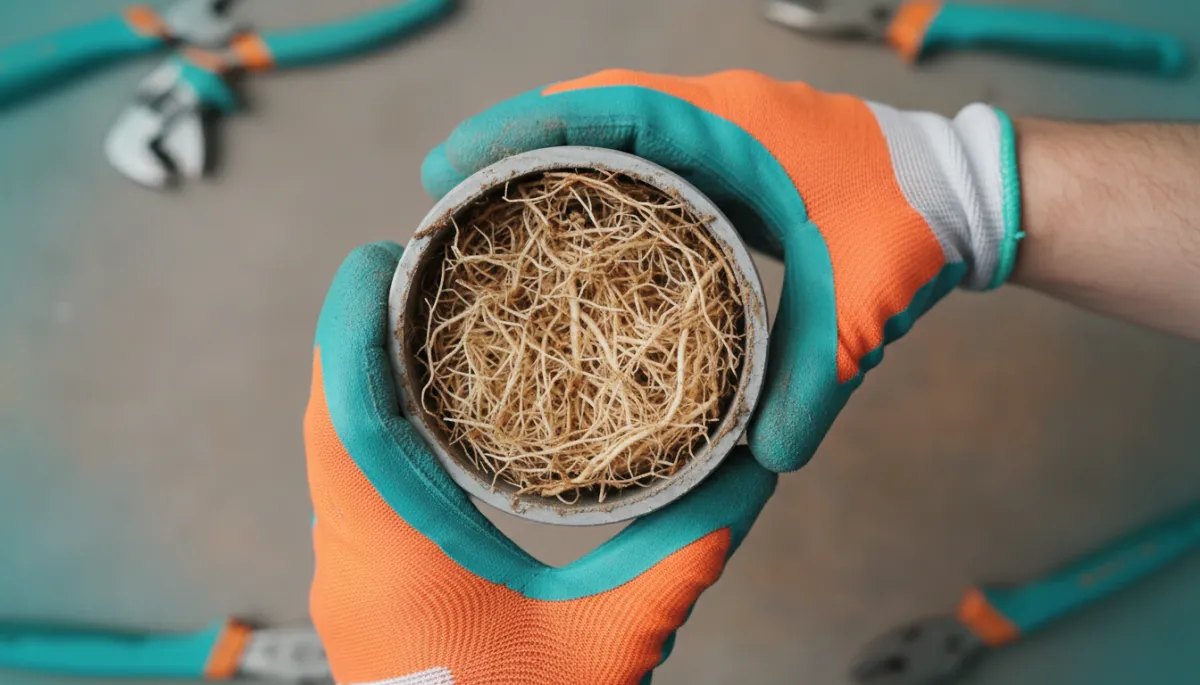
Photographic realistic close-up of a cut-open sewer pipe filled with fine tree roots, plumber’s...
Invasive roots sneak in through tiny cracks, then grow into dense mats that trap waste.
Once roots get inside, they expand into a thick tangle that catches toilet paper, wipes, and everything else you send down the line. You might clear it once with a snake, only to have the problem come back months later as the roots regrow.
“Tree Roots in Sewer Line Cost” – What to Expect in 2026
If you’ve Googled “tree roots in sewer line cost”, you’ve seen that prices vary a lot. Here’s a friendly, big-picture look at what national 2026 estimates show, based on industry guides and cost studies:
Camera inspection: about $150–$600 (often around $275) to see exactly where roots are and how bad the pipe is.
Snaking / mechanical root cutting: roughly $100–$600 for a temporary clear-out.
Hydro jetting: typically $350–$1,200 depending on severity and line length.
Trenchless sewer lining or bursting: usually $2,000–$15,000 for a more permanent fix, depending on footage and access.
The key is that snaking and jetting are usually short-term solutions for root problems. If your line is old and cracked, you’ll likely need some kind of repair or replacement to stop the cycle of backups.
Aging Cast-Iron Sewer Laterals: A Time Bomb Under Many SWFL Homes
Many homes built in SWFL before the late 1970s still have cast-iron sewer laterals—the pipe that runs from your house to the city main or your septic system. Cast iron doesn’t last forever. Decades of moisture, coastal air, and soil conditions cause it to:
Rust and flake away from the inside (called tuberculation)
Crack along the bottom of the pipe where waste sits
Collapse in sections, especially where the soil has shifted

Photographic realistic plumber in pop retro colored uniform showing a homeowner two pipe...
Old cast iron flakes and cracks, giving roots and sand an easy path inside.
When cast iron breaks down, you don’t just get clogs—you can also get that classic sewer smell from drain Florida homeowners complain about. Cracks and gaps let sewer gas escape into the soil and, sometimes, back into your home through floor drains or loose connections.
Other Causes of Sewer Smell from Drains
While damaged sewer lines are a big culprit, not every odor means disaster. Home improvement experts point to a few common causes:
Dry P-traps: Floor drains or guest baths that aren’t used often can dry out, letting sewer gas into the house. Running water for 30–60 seconds can refill them.
Blocked vent pipes: If the roof vent is clogged with debris or a bird’s nest, sewer gases can’t escape properly and may push back through drains.
Bacterial buildup: Gunk and organic material in sink or shower drains can grow odor-causing bacteria.
💡 Friendly Tip: If refilling traps and basic cleaning don’t clear the odor—or if you also have slow drains, gurgling, or backups—it’s time to schedule a professional drain cleaning and possibly a camera inspection.
Slow Drain Cape Coral? When a Snake Is Enough vs. Hydro Jetting or a Camera
One of the most common questions we hear is, “Do I need hydro jetting or a snake?” The answer depends on what’s causing the clog and how often it comes back. Here’s a friendly guide to help you understand the options.
When a Drain Snake Is Usually Enough
Single fixture problem: One sink, one toilet, or one shower is slow or clogged, but the rest of the house is fine.
Hair or small object: Bathroom drains packed with hair, or a small item stuck in the trap.
First-time clog: You haven’t had repeated issues in that line before.
A professional snake can break up and pull out local clogs quickly and affordably. Many homeowners start here, and for simple issues, it works great.
When You Should Consider Hydro Jetting
Whole-house problems: Multiple fixtures are slow, or you get frequent backups in different rooms.
Grease, sludge, and scale: Kitchen lines with years of buildup, or old cast-iron pipes with heavy interior corrosion.
Recurring root issues: Roots that keep growing back after snaking.
Hydro jetting uses high-pressure water to scour the inside of the pipe. Unlike a snake, which just punches a hole through the clog, jetting cleans the walls of the pipe and flushes out grease, sand, and root fragments. It’s more thorough and often keeps lines clear longer—especially helpful in sandy, root-prone SWFL neighborhoods.
When a Camera Inspection Is Necessary

Photographic realistic close-up of a sewer camera monitor showing the inside of a pipe with...
A camera inspection reveals if you have simple buildup or serious pipe damage.
You’ve had multiple clogs in a year, especially in different fixtures.
Your home has older cast-iron laterals and you suspect corrosion or collapse.
You’re seeing sewage in the yard or smelling strong odors outside after rain.
A camera inspection lets us see exactly what’s going on: roots, bellies, cracks, or breaks. It usually costs a few hundred dollars, but it can save you thousands by preventing guesswork and targeting the right repair the first time.
Sewer Line Repair Costs: What You’re Really Paying For
When sewer line repair is needed, homeowners often worry they’re about to face a financial nightmare. The truth is, costs range widely depending on how long the line is, how deep it’s buried, and whether trenchless methods are possible. Nationally, guides report:
Minor spot repairs: a few thousand dollars if only a short section needs attention.
Trenchless lining or bursting: often $2,000–$15,000 depending on footage and complexity.
Full excavation and replacement: can run $3,000–$20,000+ when you factor in digging, permits, and landscape repair.
It’s a big investment, but in homes with failing cast iron and constant root intrusion, a proper repair often costs less in the long run than repeated emergency calls, cleanup, and damage to floors, walls, and furnishings.
📌 Key Takeaway: Use snaking and hydro jetting for relief, but if backups keep returning—especially in an older SWFL home—ask for a camera inspection and a long-term sewer line repair plan.
How Often Should You Schedule Drain Cleaning in SWFL?

Photographic realistic plumber in pop retro style van parked in front of a Southwest Florida...
Regular drain cleaning is cheaper and calmer than a 2 a.m. emergency backup.
Nobody wants to be Googling “emergency plumber near me” in the middle of the night. A simple maintenance schedule can dramatically reduce the chances of a nasty surprise. For most SWFL homeowners, a good rule of thumb is:
Annual whole-house drain cleaning if you have older pipes, big trees, or a history of clogs. This can be snaking or hydro jetting depending on your line’s condition.
Every 2–3 years with a camera check if you’ve had root issues or cast-iron corrosion in the past, to catch new problems early.
Before you buy or sell a home: a sewer camera inspection to avoid inheriting someone else’s problem—or to prove your line is in good shape.
Regular drain cleaning is like an oil change for your plumbing: not exciting, but it keeps everything running smoothly and prevents those stressful, messy emergencies.
Our Friendly $50-Off Drain Promo: A Smart First Step
If you’re already dealing with smelly drains or a slow shower, you don’t have to wait for a full-blown backup. We’re currently offering a $50-off drain promo on qualifying drain cleaning services, so you can get professional help at a friendlier price.
Great for clearing that stubborn kitchen or bathroom line before it turns into a bigger problem.
Perfect opportunity to ask about the condition of your sewer lateral and whether a camera inspection makes sense.
💡 Friendly Tip: Mention the $50-off drain promo when you call so we can apply it to your qualifying drain cleaning visit.
Putting It All Together: A Simple Plan for SWFL Homeowners
Living in SWFL means enjoying sunshine, palm trees, and warm weather—but it also means dealing with sandy soil, heavy rains, thirsty roots, and aging sewer lines. To keep your plumbing happy and avoid emergency calls at 2 a.m., here’s a friendly action plan:
Pay attention to early warning signs: gurgling drains, recurring slow showers, or that telltale sewer smell are your plumbing’s way of asking for help.
Start with the right tool: a snake for simple, single-drain clogs; hydro jetting for whole-house issues, grease, or roots; and a camera inspection when problems keep coming back or your home has older cast-iron lines.
Think long-term with sewer line repair: if your line is cracked, bellied, or invaded by roots, a proper repair or trenchless replacement is usually cheaper and less stressful than years of repeat clogs and cleanup.
Schedule regular maintenance: annual or biannual drain cleaning and periodic camera checks can keep sandy soil, heavy rains, and tree roots from winning the battle.
With the right information—and a friendly, experienced plumbing team on your side—you can stay ahead of SWFL’s unique plumbing challenges. Instead of reacting to every smelly drain or slow shower, you’ll have a clear plan to protect your home, your budget, and your peace of mind.
If you’re tired of searching “slow drain Cape Coral” or wondering “do I need hydro jetting or a snake” every few months, reach out today. We’ll help you figure out what’s really going on underground, recommend the right mix of drain cleaning and sewer line repair, and get you started with our $50-off drain promo so you can feel confident your SWFL home is protected—from the pipes up.

Facebook
Instagram