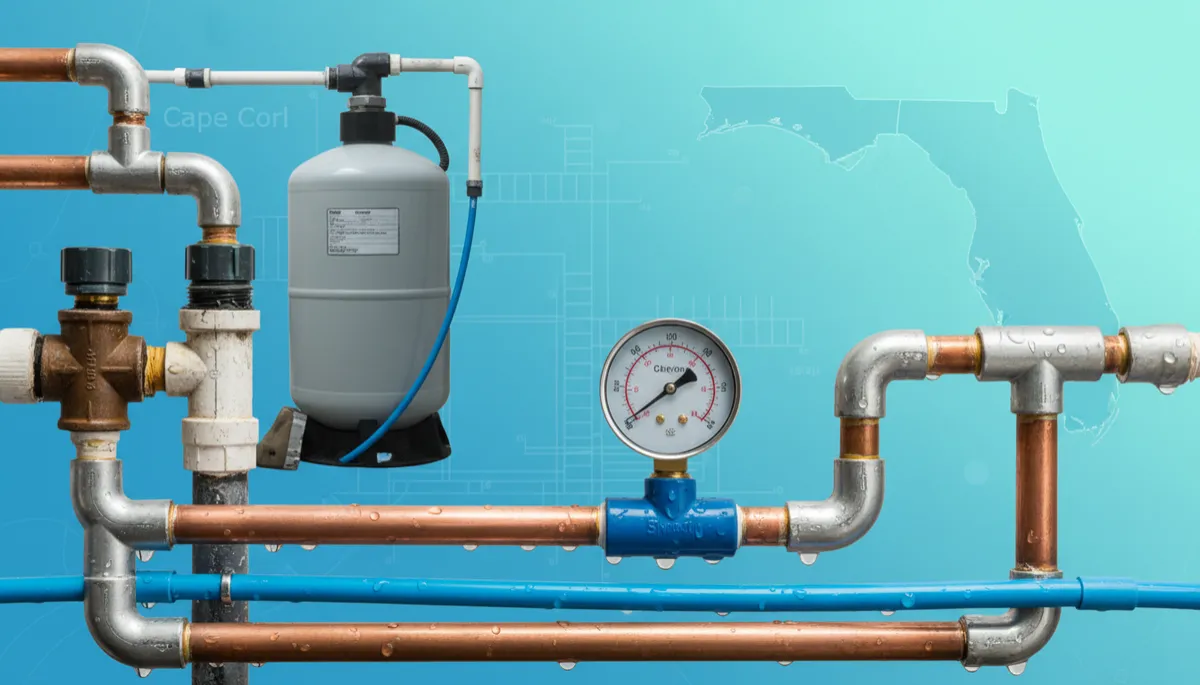
Cape Coral UEP: Switch from Well to City Water
Cape Coral Utilities, Utility Extension Project, Well To City Water
Navigating the Cape Coral UEP: What to Expect When Switching from Well to City Water
If you live in a Cape Coral neighborhood that’s now part of a Utilities Extension Project (UEP), you’re probably hearing a lot about deadlines, assessments, plumbers, and permits. For many homeowners, the biggest worries are simple: How much will this cost? and What exactly has to change in my house when I go from well to city water? This guide walks you through the local numbers, the municipal process, and the real “house-side” plumbing adjustments you can expect when Cape Coral Utilities reaches your street.
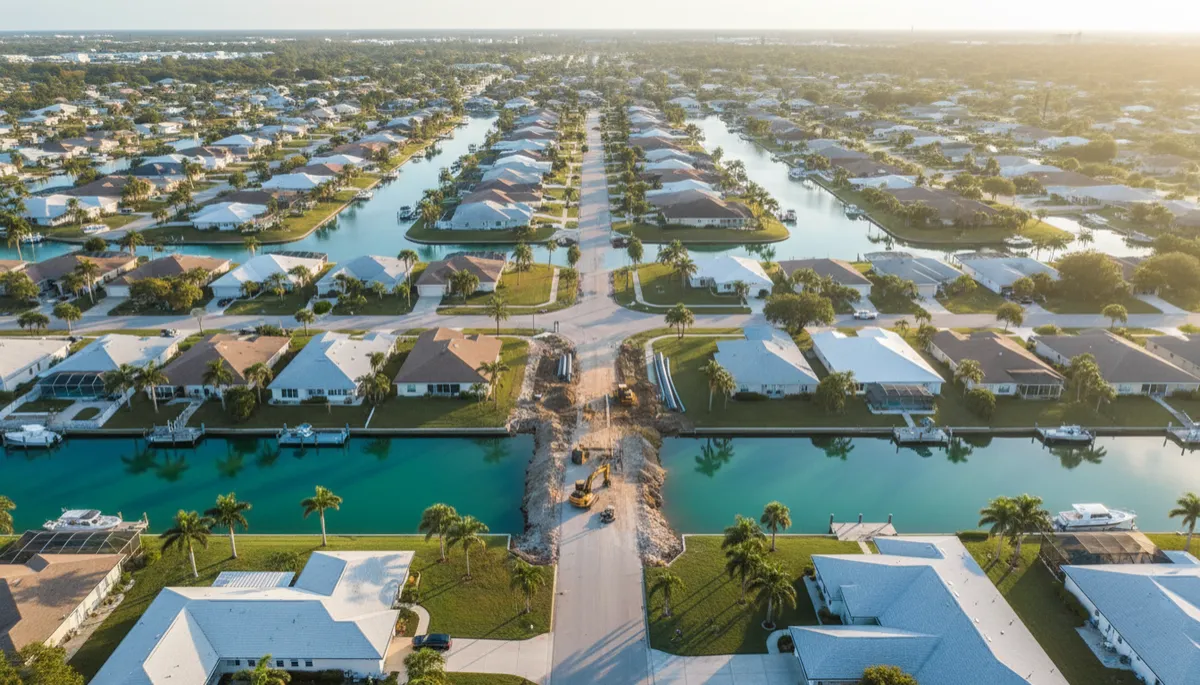
Switching From Well to City Water in Cape Coral
Understand your plumbing costs, city process, and in-home adjustments
Why the Cape Coral Utility Extension Project Matters for Your Home
Cape Coral has been investing heavily in water and sewer infrastructure, especially in the northern areas of the city. In the Fiscal Year 2026 budget alone, the city earmarked hundreds of millions of dollars for projects like the North 1 and North 3 UEP areas, reverse osmosis water treatment expansion, and water reclamation facilities (capecoral.gov). The goal is clear: move homes off private wells and septic systems and onto a modern, centralized system that protects water quality, supports growth, and improves reliability during dry seasons.
For homeowners, that big-picture Utility Extension Project translates into a very personal reality: a certified letter in the mail, a 180-day clock, and decisions about plumbing costs and house-side adjustments. Understanding how the municipal side and your private plumbing side work together can reduce a lot of anxiety as you move from Well To City Water.
Step 1: Your Notice of Availability and the 180-Day Deadline
The official conversion process starts when Cape Coral Utilities sends you a certified Notice of Availability (NOA). This letter confirms that potable water, sewer, and (in most areas) non-potable irrigation water are now available to your property through the UEP. From the date you receive that NOA, you have 180 days to connect to the city system (capecoral.gov).
That deadline is not just a suggestion; connection is mandatory in UEP areas. Missing it can lead to code enforcement issues and potentially fines. So, as soon as the NOA arrives, it’s time to start planning both the city paperwork and the house-side plumbing work you’ll need to schedule with a licensed contractor.
Step 2: The City-Side Process and Municipal Fees You’ll Pay
Before anyone starts digging on your property, you’ll handle a few administrative steps with Cape Coral Utilities. These are separate from your plumber’s invoice but directly tied to the Utility Extension Project and your new service account.
Utility Service Extension Application
You’ll complete a Utility Service Extension Application online through the city’s portal under “Water and Sewer Service – Utility Extension/New Utility Connections.” You’ll need:
A copy of driver’s license(s) for all owners
Your STRAP number (listed on your NOA or tax bill)
The name of the licensed plumber who will handle your connection
This is where the city and your chosen contractor begin to coordinate. Having a plumber selected early keeps your 180-day window from slipping away while you shop for bids.
2026 Municipal Fees for New Cape Coral Utilities Connections
As of 2026, homeowners moving from well to city water in a UEP area should budget for several standard city fees, separate from their assessment and financing for the project itself:
Fee Type | 2026 Amount (Approx.) |
|---|---|
Water meter installation | $325 |
Utility account deposit | $225 (may be waived with good payment history) |
Septic abandonment permit | $100 |
Misc. plumbing permit (non-new construction) | About $140 |
Altogether, these municipal fees total roughly $790 in 2026 (utilitycostguide.com; capecoral.gov). They are in addition to your long-term UEP assessment and the plumber’s charges for house-side work.
💡 Pro Tip: Ask Cape Coral Utilities whether your deposit can be waived based on your history with the city. It’s a small savings, but every bit helps when you’re juggling UEP costs.
Step 3: Understanding Plumbing Costs for the Utility Extension Project
When homeowners talk about “Cape Coral Utility Extension Project plumbing costs and process,” they’re usually focused on the check they’ll write to a licensed plumber. The city provides a general estimate: for a typical single-family home, the plumber’s portion of the work—connecting water, sewer, and irrigation from the property line to the house, plus septic pump-out and abandonment—runs about $2,000 to $3,000 (capecoral.gov).
Add in the roughly $790 in municipal plumbing-related fees, and the total plumbing-related out-of-pocket range is about $2,790 to $3,790 for 2026. That range can move up or down depending on:
How far your house sits from the street and meter location
Whether your driveway, pavers, or mature landscaping must be cut and restored
Any upgrades needed inside the home (pressure-reducing valve, new shutoff, etc.)
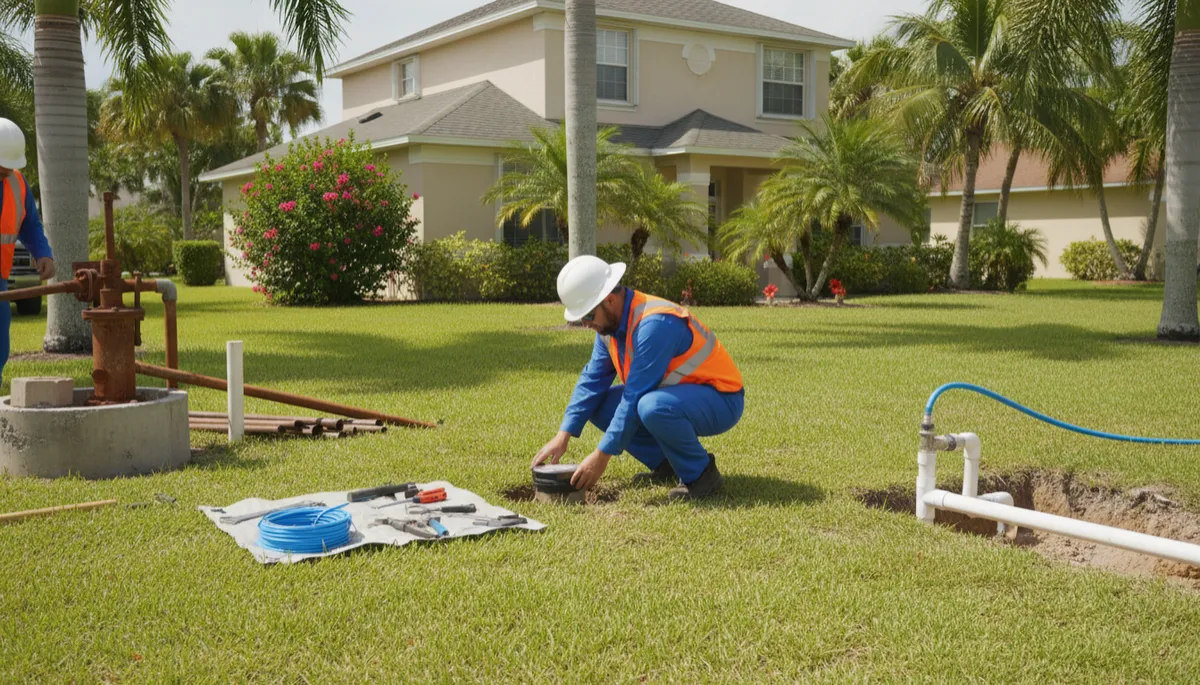
Photographic realistic close-up of a Cape Coral plumber in a fresh aqua work shirt connecting...
Most homeowners pay between $2,000 and $3,000 for the licensed plumber’s UEP connection work.
Step 4: What Actually Changes on the House Side When You Go From Well to City Water
The city handles mains, transmission lines, and meters in the right-of-way. Everything from the back of the meter to your fixtures is considered house-side or private plumbing. Understanding these House-side Adjustments helps you talk confidently with your plumber and make smart decisions about any optional upgrades.
1. New Service Line from Meter to House
Your plumber will install a new potable water line—usually minimum ¾-inch Schedule 40 PVC, buried at least 12 inches deep—from the meter at the property line to the point where your home’s plumbing system begins (ccuep.com). This line is separate from your old well piping and is designed to handle city water pressure safely.
2. Main Shutoff Valve and Backflow Protection
Near where the water line enters your home, your plumber will install a new main shutoff valve so you can quickly turn water off to the entire house if needed. Cape Coral also requires backflow prevention—often a dual check valve—to keep water from your property from flowing back into the public system. This is usually located on or near the service line just after the meter or at the house connection, depending on the setup and local code interpretation.
3. Bypassing Old Aeration Systems and Well Equipment
Many Cape Coral homes on well water use an aeration system or filtration tank in the yard to reduce sulfur odors, iron staining, and hardness. Once you connect to city water, this outdoor treatment train is no longer part of your potable supply. A key part of the house-side plumbing adjustments is safely bypassing that old equipment.
The plumber disconnects the line that carried well water from the pump to your aeration tank and from the tank into the house.
The new city water line is tied directly into the home’s cold-water main, usually at or near the point where the aeration system used to feed the house.
The aeration tank and associated piping can be left in place temporarily (disconnected) or removed, depending on your plans and the plumber’s scope of work.
Some homeowners choose to keep the well and aeration system active solely for yard irrigation if allowed and properly separated; others abandon it entirely and rely on the city’s non-potable irrigation system. What matters is that there is no cross-connection between well water and the new city water line—something inspectors will specifically look for.
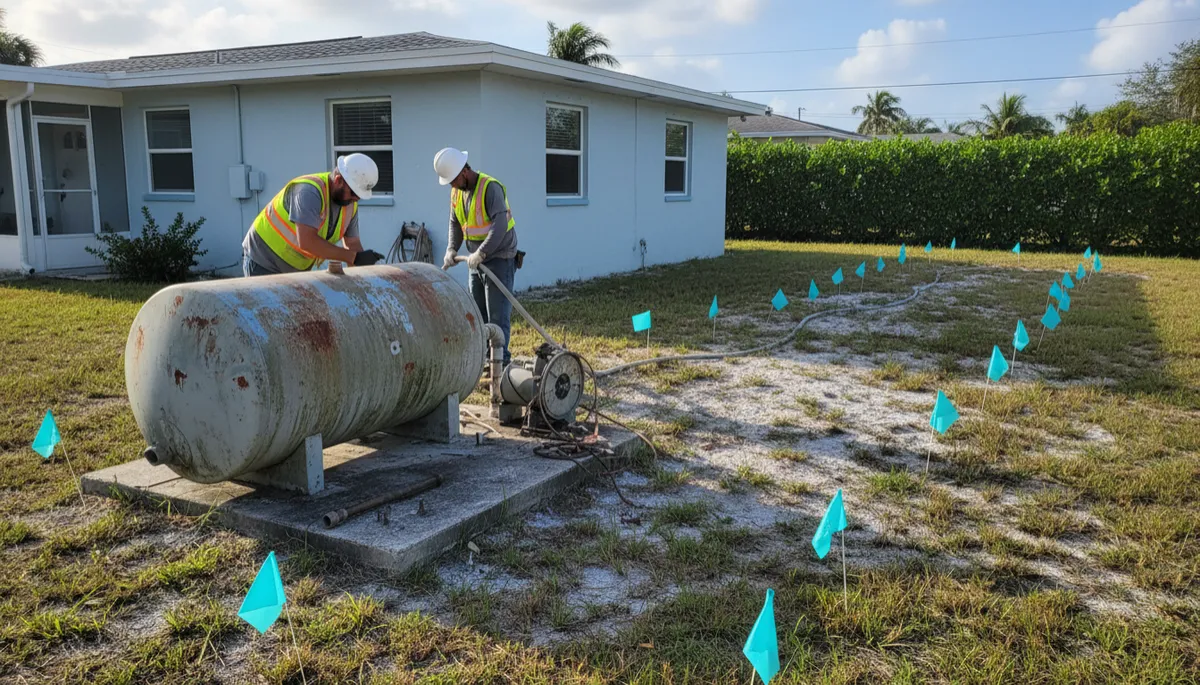
Photographic realistic side-yard view of an older Cape Coral aeration tank and well equipment...
Old aeration systems are bypassed so untreated well water can’t mix with the new city supply.
4. Handling New City Water Pressure Inside the Home
One of the biggest practical changes when you move from well to city water is pressure. Private wells in Cape Coral often run at lower or inconsistent pressure, depending on pump size, age, and water level. City water from the UEP is designed to provide more stable—and often higher—pressure.
To protect your plumbing and fixtures, your contractor may recommend:
Installing a pressure-reducing valve (PRV) if house pressure tests above recommended levels for your pipes and fixtures.
Checking older supply lines (especially to toilets and sinks) and replacing brittle or undersized lines that might not tolerate higher pressure.
Verifying that water heaters, washing machines, and dishwashers have hoses and valves rated for the new pressure.
These house-side adjustments add a bit to your overall Plumbing Costs, but they can prevent leaks, banging pipes, and premature fixture failures once you’re on the new system.
5. Interior Fixture Flushing and Chlorinated Water
Before you start drinking from the tap, your plumber must disinfect the new line (typically with chlorination) and submit a chlorination affidavit to the city. Once the new meter is installed and water is live, expect to:
Run each faucet for several minutes to flush any debris and air from the lines.
Clean or replace faucet aerators and showerheads if they clog with loosened sediment.
Get used to the taste and smell of treated, chlorinated water—many residents choose an under-sink filter or fridge filter for drinking.
Step 5: Sewer and Septic Abandonment – What Happens in the Yard
While this article focuses on water, your plumber’s UEP work almost always includes connecting to city sewer and abandoning your septic tank. This is a major part of the cape coral utility extension project plumbing costs and process because it involves excavation, pump-out, and often concrete work.
The plumber locates your existing septic tank, pumps it out, and disconnects house drains from the tank.
A new sewer line is installed from the house to the city sewer connection at the property line, with the proper slope and cleanouts.
The septic tank is abandoned per Health Department rules (often crushed in place and filled with clean material), and the $100 septic abandonment permit covers those inspections.
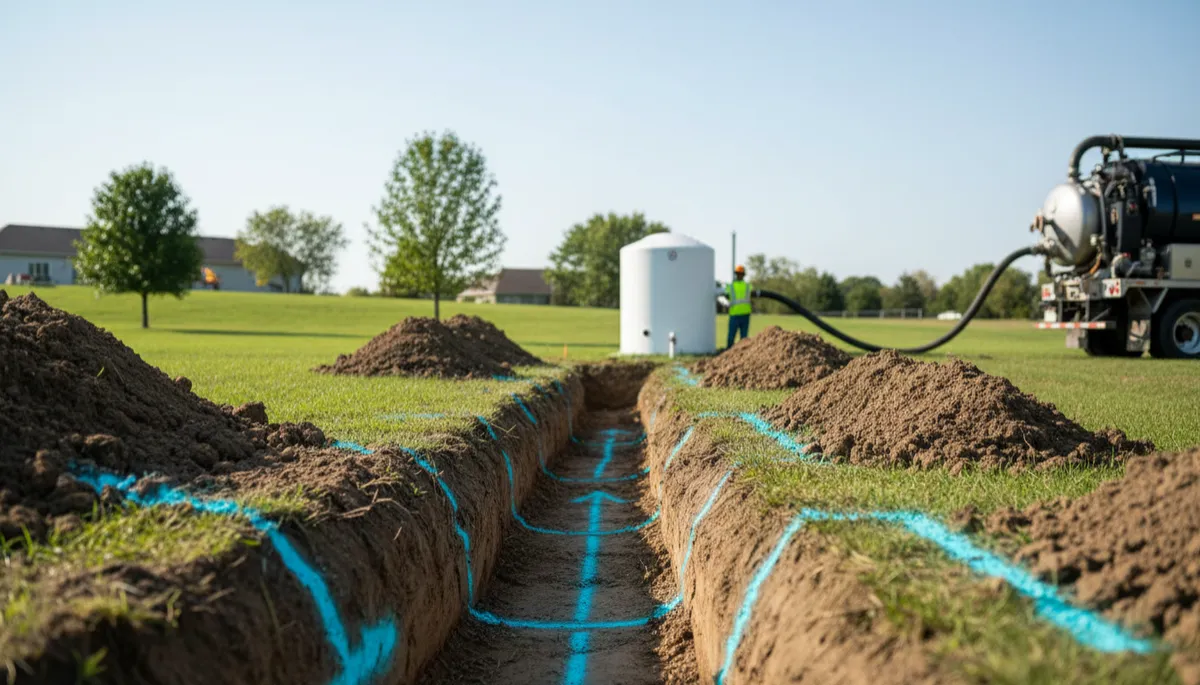
Photographic realistic backyard scene showing a trench for new sewer and water lines with fresh...
Sewer connection and septic abandonment are included in most plumbers’ UEP bids, alongside water work.
Step 6: Irrigation – From Well to City Non-Potable Water (or Not)
In many UEP areas, Cape Coral provides a separate non-potable irrigation water system. If you decide to connect your sprinklers to the city’s irrigation, you must completely disconnect your well from the irrigation lines and follow city requirements, including installation of a City-approved “Kit A” before connection (egov.capecoral.gov).
This is another area where House-side Adjustments matter. Your plumber or irrigation contractor will:
Cap or remove the old well tie-in to the sprinkler manifold.
Install the required city connection kit and any backflow devices for the irrigation service.
Adjust zone timing and heads if pressure or flow characteristics differ from your old well system.
Step 7: Inspections, Meter Installation, and Site Restoration
Once the plumber has installed your new water and sewer lines, bypassed the aeration system, and completed disinfection, they’ll call for inspections. The city inspector checks that the work meets code; the Health Department inspects septic abandonment. Until the inspector signs off, trenches must remain open for visibility (ccuep.com).
After you pass inspection, Cape Coral installs the meter, and your new account becomes active. Then your contractor backfills trenches, restores sod or landscaping as agreed, and your home officially transitions from well to city water and sewer.
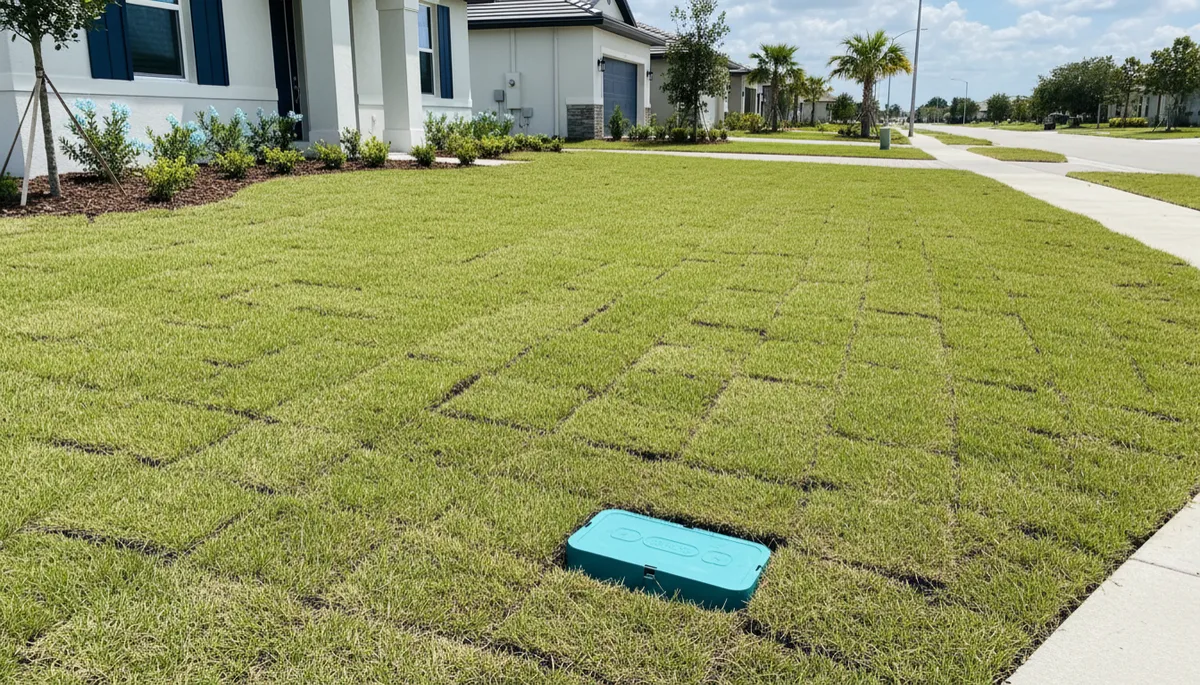
Photographic realistic finished Cape Coral front yard with fresh sod over a former trench line,...
After inspections and meter installation, contractors restore yards so signs of construction quickly fade.
Putting It All Together: Budgeting and Planning for a Smooth UEP Transition
When you add up the cape coral utility extension project plumbing costs and process, it helps to think in layers:
City-side UEP assessments and financing – These are long-term charges for the massive infrastructure work (mains, plants, and transmission lines) and vary by UEP area and lot size. For example, in some North 1 West areas, assessments run into several thousand dollars per 10,000 sq ft, with options to prepay or amortize over 30 years (ccuep.com).
Municipal connection fees – Around $790 in 2026 for meter, deposit, septic abandonment permit, and plumbing permit.
Plumber’s house-side work – About $2,000 to $3,000 for water, sewer, irrigation hookup, septic pump-out and abandonment, and core house-side adjustments like bypassing aeration and tying in the new service line.
📌 Key Takeaway: For most Cape Coral homeowners, the direct plumbing-related out-of-pocket cost to move from Well To City Water and sewer in 2026 falls roughly between $2,790 and $3,790, separate from your long-term UEP assessment.
Final Thoughts: Reducing Anxiety by Knowing What to Expect
Mandatory utility conversions can feel overwhelming, especially when you’re used to your well and aeration system and unsure how city water will change day-to-day life. But when you break it down, the Utility Extension Project is really two coordinated efforts: Cape Coral Utilities building a robust, city-wide network, and your plumber making a set of clear, manageable house-side adjustments.
On your property, that means a new service line from the meter, a clean tie-in to your home’s plumbing, bypassing or removing the old aeration system, handling the new city water pressure safely, and connecting to sewer while abandoning the septic tank. With a realistic understanding of Plumbing Costs and the step-by-step process, you can plan ahead, gather multiple bids, and schedule work comfortably within your 180-day window.
If you still have questions about your specific lot, UEP area, or financing options, Cape Coral’s UEP/New Construction team can be reached at [email protected] or 1‑833‑227‑3837, and Customer Billing Services at 239‑574‑7722 (capecoral.gov). Reaching out early—and partnering with an experienced local plumber—can turn a stressful requirement into a straightforward home upgrade that protects your property value and connects you to Cape Coral’s long-term water future.

Facebook
Instagram