

Fix Hard Water Issues in Cape Coral
Cape Coral Water, Hard Water Issues, Water Filtration Solutions
Why Your Cape Coral Water Leaves White Crust on Everything (and What Actually Fixes It)
If you live in Cape Coral, you already know the story: spotless shower doors turn cloudy, faucets grow a white crusty collar, and your dishes never quite look clean. Those stubborn marks are more than just a nuisance—they are a symptom of mineral-heavy water and deeper Cape Coral water quality challenges. In this guide, we will unpack why it happens, what the Lower Hawthorn aquifer has to do with it, and which Water Filtration Solutions actually solve the problem in Southwest Florida homes.
The Real Reason Cape Coral Water Leaves That White Crust
The white crust you see on fixtures, shower glass, and dishes is mostly dried mineral residue—primarily calcium and magnesium. When you run water in your Cape Coral home, it looks clear. But dissolved inside are microscopic mineral particles. As the water evaporates, those minerals stay behind and form the chalky, white crust that makes bathrooms and kitchens look older than they are.
This is what people mean when they talk about Hard Water Issues. Hard water is not usually an immediate health threat, but it is hard on your home: it clogs aerators, shortens the life of water heaters, stains toilets, and makes soap and detergents work less effectively. In Cape Coral, the problem is especially noticeable because of where your water comes from and how naturally mineral-heavy it is.
Meet the Lower Hawthorn Aquifer: Cape Coral’s Mineral-Heavy Source
Underneath Southwest Florida lies a layered system of underground rock and water known as aquifers. One of the most important for this region is the Lower Hawthorn aquifer. Over thousands of years, water has moved slowly through limestone and other rock formations, picking up minerals along the way. That long contact time is exactly why the water is so mineral-rich by the time it is pumped out for treatment and use.
Historic U.S. Geological Survey data show just how intense this mineral load can be. Total dissolved solids in the Lower Hawthorn aquifer have been measured from about 700 up to 3,300 mg/L, with an average near 1,936 mg/L. Calcium–magnesium hardness alone averaged around 625 mg/L—firmly in the “very hard” category. Sulfate levels and chloride are also elevated, meaning the water can be both hard and slightly salty or sulfurous in some areas. Source: USGS Open‑File Report 74‑247.
While the City of Cape Coral treats and blends water and has even earned awards for taste, the underlying reality remains: the raw source is naturally mineral-heavy water. That geology is not going to change. So if you are seeing White Crust Problems at home, it is not because you are doing something wrong—it is because of the aquifer beneath your feet and the minerals that come with it.
💡 Pro Tip: If you notice white crust on your fixtures and cloudy spots on glass, you are seeing dried calcium and magnesium from Cape Coral water—not soap scum alone.
Cape Coral Water Quality Today: Safe, but Not Always “Home-Friendly”
Multiple independent sites rate Cape Coral’s tap water anywhere from “fair” to “good.” Some, like WaterVerge, highlight past violations and elevated minerals, while others, like PurityMap and EnviroClarity, show that the city generally meets or exceeds federal standards and has even won awards for taste. At the same time, reports note moderate hardness, detectable chlorine, and some dissolved contaminants that a homeowner may still want to reduce for taste, odor, and peace of mind.
In other words, Cape Coral Water is treated to be safe to drink by regulatory standards, but that does not mean it will be kind to your plumbing, your skin, or your appliances. That is where the right Water Filtration Solutions make all the difference—especially when they are chosen specifically for Southwest Florida conditions and the Lower Hawthorn aquifer’s mineral profile.
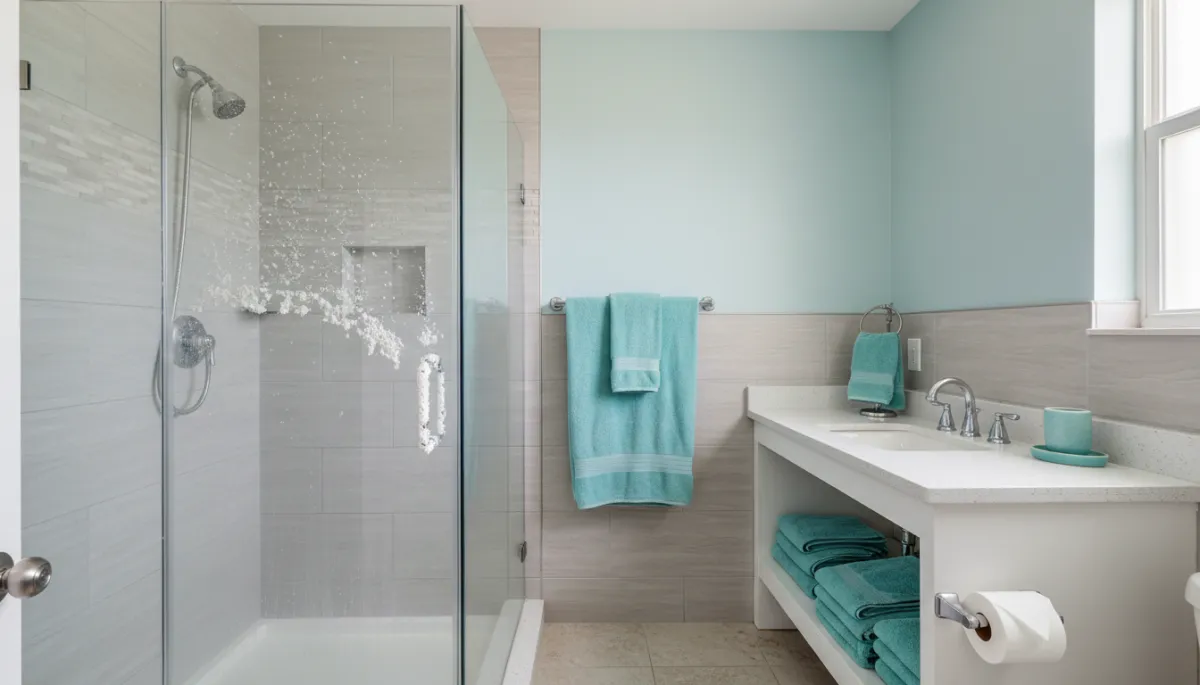
Persistent spots and crust on glass and chrome are classic signs of hard, mineral-heavy water.
Softener vs. Whole-House Filter vs. Reverse Osmosis: What’s the Difference?
One of the most confusing parts of solving Hard Water Issues is the alphabet soup of equipment: softeners, carbon filters, whole-house systems, RO, UV, and more. Let’s simplify the three most common options in SWFL and what they actually do for your Cape Coral home.
1. Water Softener (Water Softener SWFL)
A traditional salt-based water softener is designed specifically to address hardness—those calcium and magnesium minerals that leave white crust. It uses ion exchange to swap hardness minerals for sodium (or potassium), dramatically reducing scale formation inside pipes, on fixtures, and in appliances like water heaters and dishwashers.
What it actually solves: White crust on fixtures, scale buildup in pipes and water heaters, dingy laundry, dry-feeling skin and hair, and soap that does not lather well. It is the go-to solution for White Crust Problems in Cape Coral water.
What it does not solve: Chlorine taste and odor, most chemical contaminants, bacteria, or “boil water” issues. A softener is about minerals, not disinfection or full purification.
Typical installed cost in SWFL: For a quality residential Water Softener SWFL homeowners can expect to invest roughly $1,500–$2,500 for a professionally installed salt-based system, depending on size, brand, and plumbing complexity. Simple installs may be closer to $800–$1,500, while high-end or more complex setups can reach $3,000–$4,000+, based on regional cost data for Florida and nearby markets.
2. Whole-House Water Filter
A whole-house filter (sometimes called a point-of-entry system) treats all the water as it enters your home. Most systems for Cape Coral use one or more stages of filtration media—often activated carbon—to reduce chlorine, disinfection byproducts, some organic chemicals, and improve taste and odor. Some advanced systems also include sediment filters and specialty media for specific contaminants like iron or sulfur.
What it actually solves: Chlorine taste and smell, many common chemical contaminants, some discoloration, and general water aesthetics. Showers smell better, skin is less irritated by chlorine, and tap water tastes cleaner throughout the house.
What it does not solve (by itself): True hardness. A standard whole-house carbon filter will not remove enough calcium and magnesium to stop white crust. Without a softener, you will still see scale on fixtures and inside appliances, even if the water smells better.
Typical installed cost in SWFL: Whole-house filters vary widely, but many Cape Coral homeowners spend roughly $1,200–$2,800 installed for a good-quality carbon-based system, depending on flow rate, media type, and whether it is combined with a softener. Larger homes or specialty contaminant media can increase that investment.
3. Reverse Osmosis (RO)
Reverse osmosis is a more intensive filtration process that pushes water through a semi-permeable membrane, removing a wide range of dissolved solids, including many minerals, salts, and contaminants. In Southwest Florida, RO is most commonly installed as a point-of-use system—typically under the kitchen sink for drinking and cooking water. Whole-house RO does exist, but it is more complex and expensive, especially with mineral-heavy water from the Lower Hawthorn aquifer.
What it actually solves: High levels of dissolved solids, many contaminants that slip through basic filters, and taste issues. RO can significantly reduce minerals, some metals, and many chemical compounds, giving you very low‑TDS drinking water that tastes clean and fresh.
What it does not solve (by itself): Housewide scale and white crust. A small under-sink RO system only treats one faucet. Your showers, laundry, and appliances will still see hard water unless you pair RO with a softener or broader filtration solution.
Typical installed cost in SWFL: For an under-sink RO system, most homeowners in Southwest Florida can expect a professional installation in the $600–$1,500 range, depending on the number of stages, storage tank size, and whether the system feeds the refrigerator as well. Whole-house RO is a much larger project and often runs several thousand dollars more; it is usually reserved for special situations rather than the average Cape Coral home.
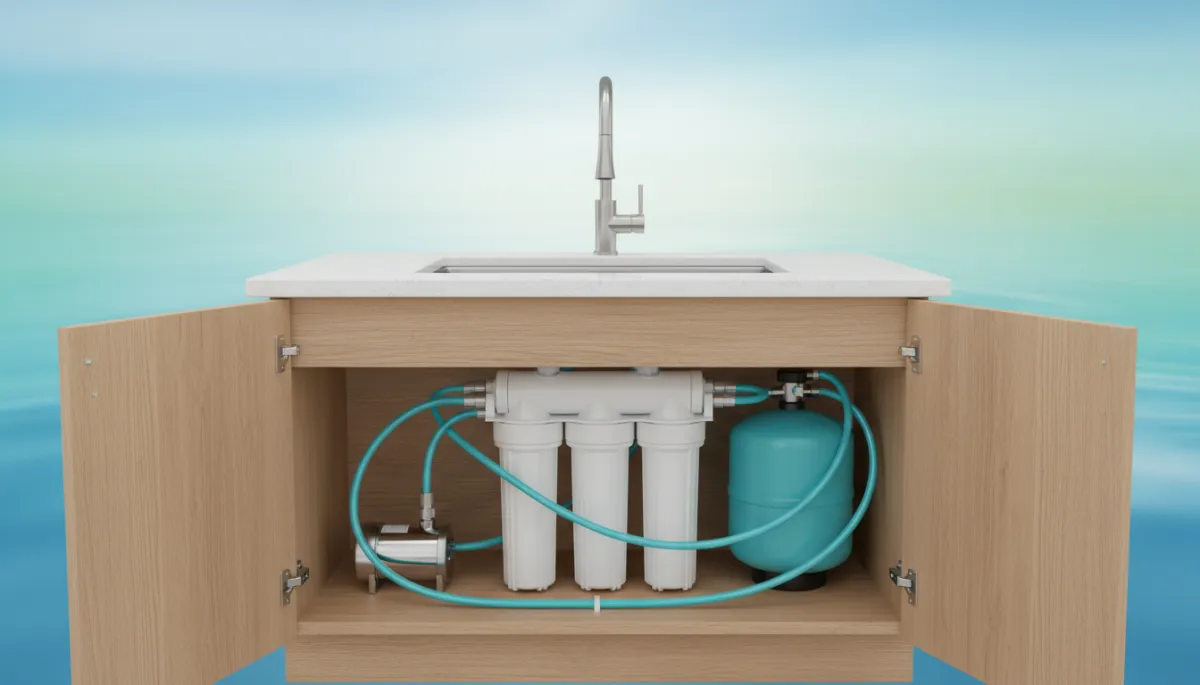
Reverse osmosis is ideal for clean-tasting drinking water, but it does not replace a whole-house softener.
So Which System Fixes White Crust Problems in Cape Coral?
If your main complaint is that everything in your bathroom and kitchen is coated in white film, you need to directly address hardness. That means:
A water softener is non‑negotiable for serious Hard Water Issues and scale control in Cape Coral.
A whole-house filter is a powerful add‑on to improve taste, odor, and chlorine, but it will not stop crust by itself.
Reverse osmosis is the finishing touch for drinking water quality, not a replacement for a softener when it comes to scale on fixtures and appliances.
📌 Key Takeaway: If you want to stop white crust on everything in your Cape Coral home, a properly sized, professionally installed water softener is the foundation. Filters and RO are important upgrades, but they do not replace softening for scale control.
What a Realistic Filtration Setup Looks Like for a Cape Coral Home
Because Cape Coral water is both mineral-heavy and treated with disinfectants, many homeowners choose a layered approach. Here is a practical example of a setup tailored to our region’s Lower Hawthorn aquifer water and city treatment:
Whole-house sediment and carbon filtration: As water enters the home, a sediment filter removes sand and fine particles, while a carbon tank reduces chlorine, disinfection byproducts, and many chemical tastes and odors. This protects plumbing and improves water quality for showers and laundry.
Salt-based water softener: Installed after the filter, the softener handles the heavy lifting on hardness, dramatically cutting down scale from Cape Coral’s mineral-heavy water. Fixtures stay cleaner, and appliances last longer.
Point-of-use reverse osmosis: Under the kitchen sink, an RO system provides ultra-clean, low‑TDS water for drinking, ice, and cooking—especially helpful if you are concerned about dissolved solids, trace contaminants, or just want the freshest-tasting water possible.
Installed together, these Water Filtration Solutions can transform your experience of Cape Coral water—from fighting white crust every weekend to enjoying clear glassware, softer laundry, and better-tasting drinking water straight from your own tap.
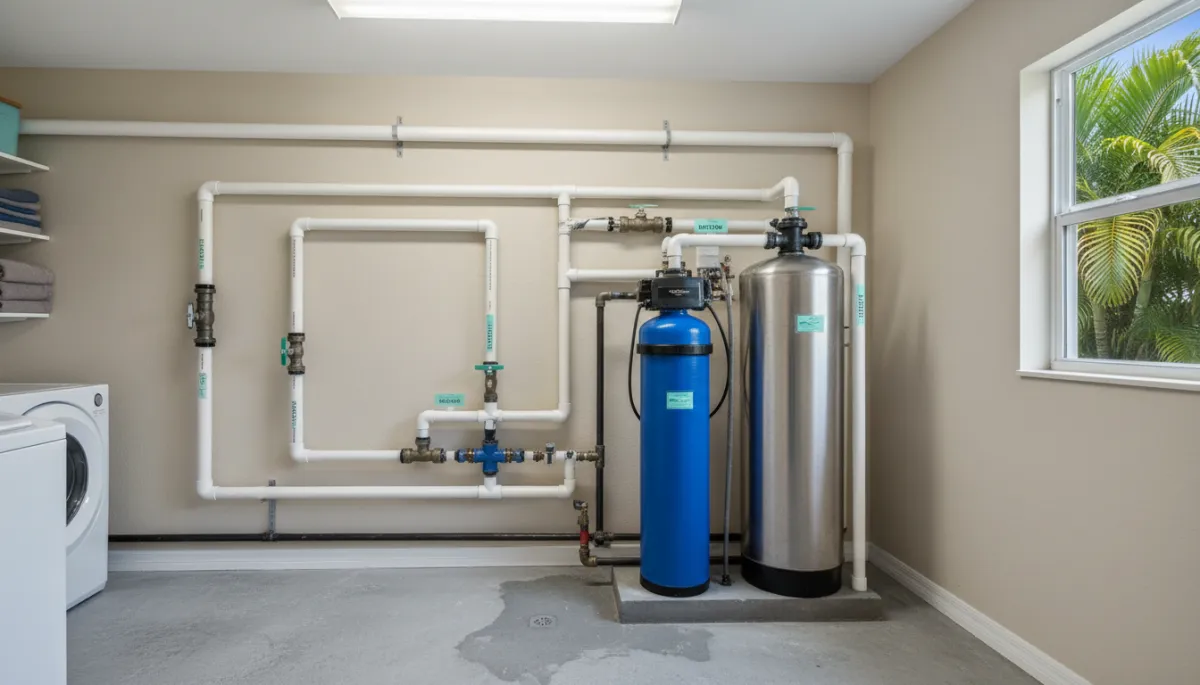
Pairing a softener with whole-house filtration tackles both scale and taste issues from Cape Coral water.
Budgeting for Water Filtration Solutions in Southwest Florida
When you are comparing quotes, it helps to know whether the numbers you are seeing are realistic for SWFL. Based on 2026 cost data for Florida and similar markets, here is a rough guide for professionally installed systems in our area:
Water Softener SWFL: About $1,500–$2,500 for a typical, high-quality salt-based system, with simpler installs starting around $800–$1,500 and complex or premium systems reaching $3,000–$4,500+.
Whole-house filter: Often in the $1,200–$2,800 installed range for a carbon-based system sized for a typical Cape Coral home, depending on media type and flow rate.
Under-sink reverse osmosis: Generally $600–$1,500 installed, depending on the complexity of the plumbing and whether the line is extended to the refrigerator.
These ranges include both equipment and labor. Your exact investment will depend on your home’s plumbing layout, water usage, and whether you are combining systems into a single, integrated installation. A reputable local provider familiar with Cape Coral water and the Lower Hawthorn aquifer’s mineral load will size and configure your system so you are not overpaying for capacity you do not need—or under-sizing a system that will not keep up.
💡 Pro Tip: When comparing quotes, ask whether pricing includes media, valves, installation, permits if needed, and first-year maintenance. A lower sticker price is not always the better value if it leaves out essentials.
How This Ties into Our Water Filtration Services for Cape Coral
Every neighborhood in Cape Coral can experience slightly different water conditions based on local infrastructure, distance from treatment plants, and even seasonal changes. That is why our Water Filtration services are built around one simple idea: start with your actual water, then design the solution—not the other way around.
On our Water Filtration page, we walk through the same core options you have read about here—water softeners, whole-house filters, and reverse osmosis—and show you how they can be combined to solve the specific Hard Water Issues that come from the Lower Hawthorn aquifer and Cape Coral’s treatment process. We focus on:
Testing and understanding your home’s water profile, including hardness, chlorine, and total dissolved solids.
Recommending only the Water Filtration Solutions that actually address your goals—whether that is stopping white crust, improving taste, or protecting a new tankless water heater.
Installing and maintaining systems that are sized and configured specifically for Cape Coral water conditions.
The right filtration setup turns Cape Coral’s challenging water into clean, convenient water at every tap.
Ready to Stop Fighting White Crust in Your Cape Coral Home?
Cape Coral’s mineral-heavy water is not going to change. The Lower Hawthorn aquifer will continue delivering very hard, mineral-rich water to our region, and the city will continue treating it to meet safety standards. But inside your home, you have far more control than you might think. With the right combination of a water softener, whole-house filtration, and, where needed, reverse osmosis, you can protect your plumbing, improve your family’s comfort, and finally say goodbye to constant scrubbing of white crust.
If you are tired of cloudy shower doors, stiff laundry, and water that does not taste quite right, your next step is simple: visit our Water Filtration page to explore your options, or schedule a home water evaluation. We will help you understand exactly what is in your Cape Coral water—and design a solution that actually fixes it, for good.


Facebook
Instagram